


As part of its new Domestic Growth Acceleration Strategy (DGAS), the federal government has announced a shift in its economic role—from being the primary spender to serving as a strategic enabler that attracts private investment.
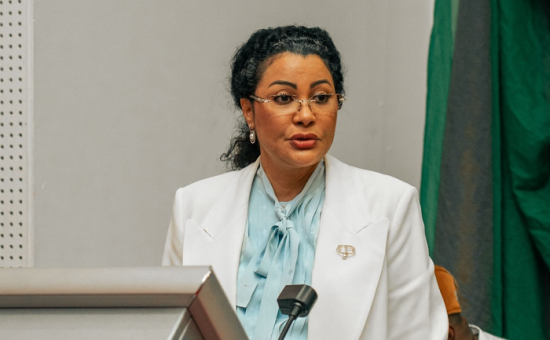
The Minister of State for Finance, Dr. Doris Uzoka-Anite, revealed this on Monday in Abuja at the National Economic Council (NEC) Conference. She stated that this new approach has been integrated into the 2026–2030 National Development Plan.
Uzoka-Anite explained that the government has introduced an “Investment Budgeting” system aimed at reducing risks associated with major projects and encouraging private sector funding. She emphasized that every naira spent by the government under this system could leverage three to five times more private sector capital.
“Our role must evolve decisively from being the primary spender to becoming an enabler of investments that de-risk and unlock private capital,” Uzoka-Anite said. “The government alone cannot finance the transformation we seek.”
She highlighted that Nigeria’s development needs far exceed what public funds can supply, especially in critical infrastructure sectors like roads, power, transport, and housing. “Strategic public de-risking can unlock private investments at a multiplier of three to five times the public expenditure,” she noted. “For accelerated development at the desired scale, we need a deliberate framework—Investment Budgeting—that mobilizes private capital, builds productive assets, and delivers long-term economic returns.”
While Nigeria’s economy is beginning to stabilize, Uzoka-Anite emphasized that much work remains to achieve the long-term goal of building a $1 trillion economy. She noted that Nigeria’s estimated growth recovery in 2025 was around four percent, which is insufficient for reaching the trillion-dollar benchmark.
“While a six to seven percent growth rate can reduce poverty, reaching a $1 trillion economy requires sustained double-digit growth,” she said. “Such expansion must be driven by private investment and comprehensive structural reforms.”
Regarding Nigeria’s fiscal outlook for 2026, the Minister projected government revenue at ₦34 trillion. She also indicated that the tax-to-GDP ratio is expected to approach 18 percent once the Nigeria Tax Act 2025 is fully implemented and tax harmonization across states is achieved.
Inflation is also expected to decline further, with the Central Bank of Nigeria aiming for a rate below 13 percent by the end of 2026. This forecast is supported by ongoing bank recapitalization, a positive trade balance, and foreign reserves exceeding $40 billion.
Uzoka-Anite stressed that relying solely on government funding to bridge Nigeria’s infrastructure gap is unrealistic. “At current rates of government allocation, Nigeria would need over 111 years to mobilize the $300 billion required for infrastructure investments,” she said.
She argued that leveraging Investment Budgeting to attract private capital is the only viable solution. “A capital pool of $100 billion, with a marginal propensity to consume of 0.64 to 0.75, could generate between $278 billion and $400 billion in economic output,” she added.
However, she warned that the economy still faces significant risks, including oil price fluctuations, food supply challenges, and climate-related shocks that could slow progress.
Uzoka-Anite called for disciplined policy implementation and stronger cooperation between the federal and state governments to translate macroeconomic stability into tangible improvements in Nigerians’ lives. “We must enhance federal-state collaboration to ensure that macroeconomic stability results in better living standards for all,” she concluded.